
Beyonder
Client Name
Beyonder
Service Offered
App Design
Project Kickoff
Partnership
2026
Project Overview
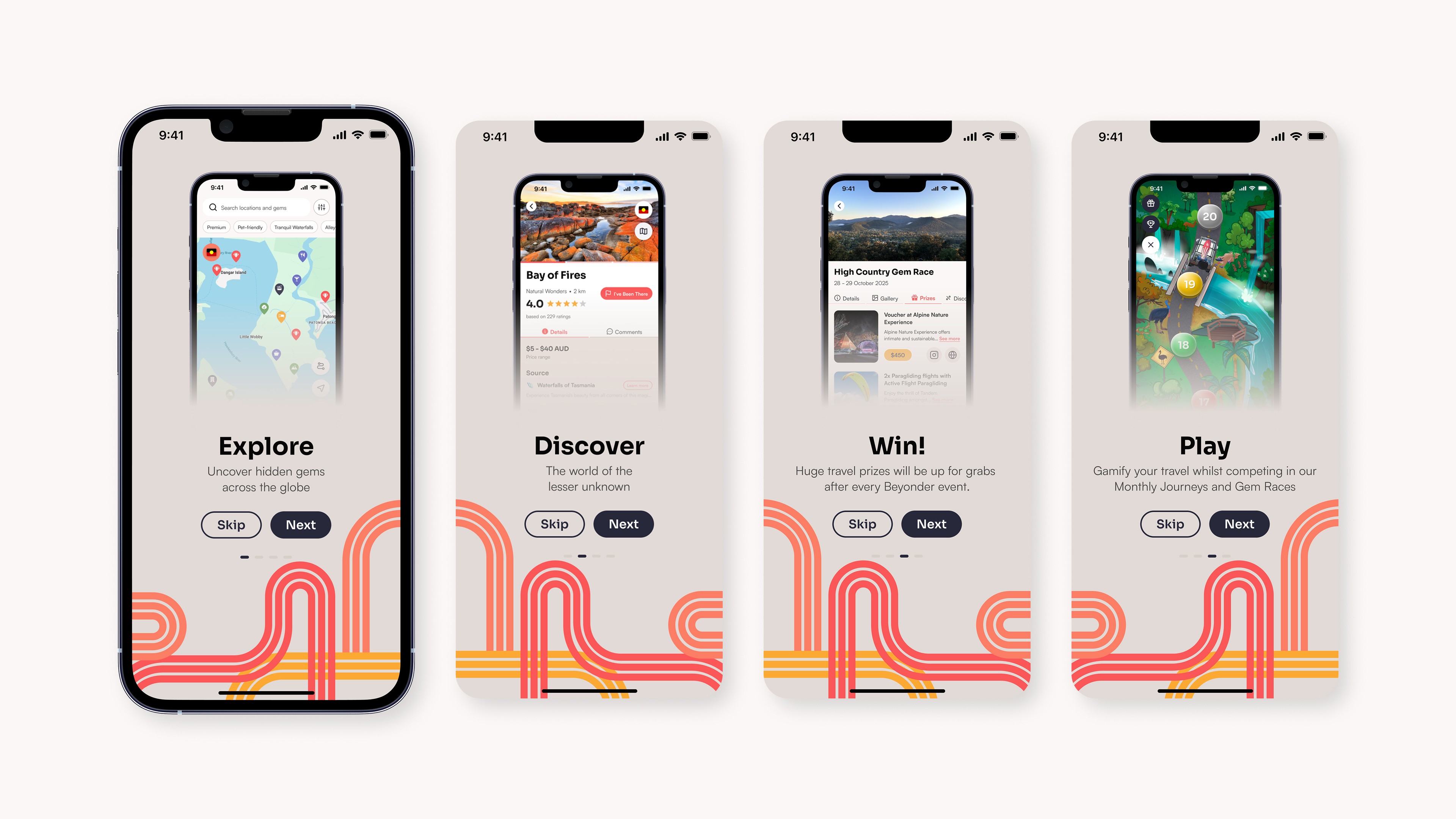
Beyonder is a platform built around discovery — helping users explore, submit, and engage with locations and experiences that sit beyond the obvious. At its core, the product is powered by user-generated content: submissions from a community of explorers, surfaced through a mobile app that is both a guide and a growing map.
What began as a focused design engagement evolved into a long-term partnership spanning over two years. Our studio was brought in not just to execute screens, but to help shape how the product thinks — how it organises information, how it communicates with users, and how it scales without losing what makes it compelling.
Alongside the consumer-facing app, we designed and built a dedicated management platform: a desktop tool that allows the Beyonder team to manage locations, moderate user submissions, configure features, and maintain data integrity as the platform grows.
The Challenge
When Beyonder first engaged us, the product had strong foundational energy — a clear premise and a community that was already forming around it. But the design and product experience hadn’t kept pace. Several interconnected challenges needed to be addressed simultaneously:
The app lacked a cohesive visual identity. There was no defined design language — no colour system, no type hierarchy, no component logic — which made the experience feel inconsistent and limited the team’s ability to move fast with confidence.
User flows were under-examined. Without a clear picture of how people actually moved through the app — what brought them in, where they dropped off, what they kept returning for — it was difficult to make confident product decisions.
The submission and content management process was largely manual. As the user base grew, the absence of a proper backend management interface was creating bottlenecks that threatened the quality of the platform’s content.
There was no scalable design system. Every new screen or feature required decisions that should have already been made — creating drag on development and inconsistency in the end product.
Underneath all of this was a more fundamental question: what kind of app does Beyonder want to be, and how does every design decision serve that goal?
Discovery and Strategy
We began with research — not as a formality, but because the product decisions that matter most are grounded in genuine user understanding. Our discovery phase covered:
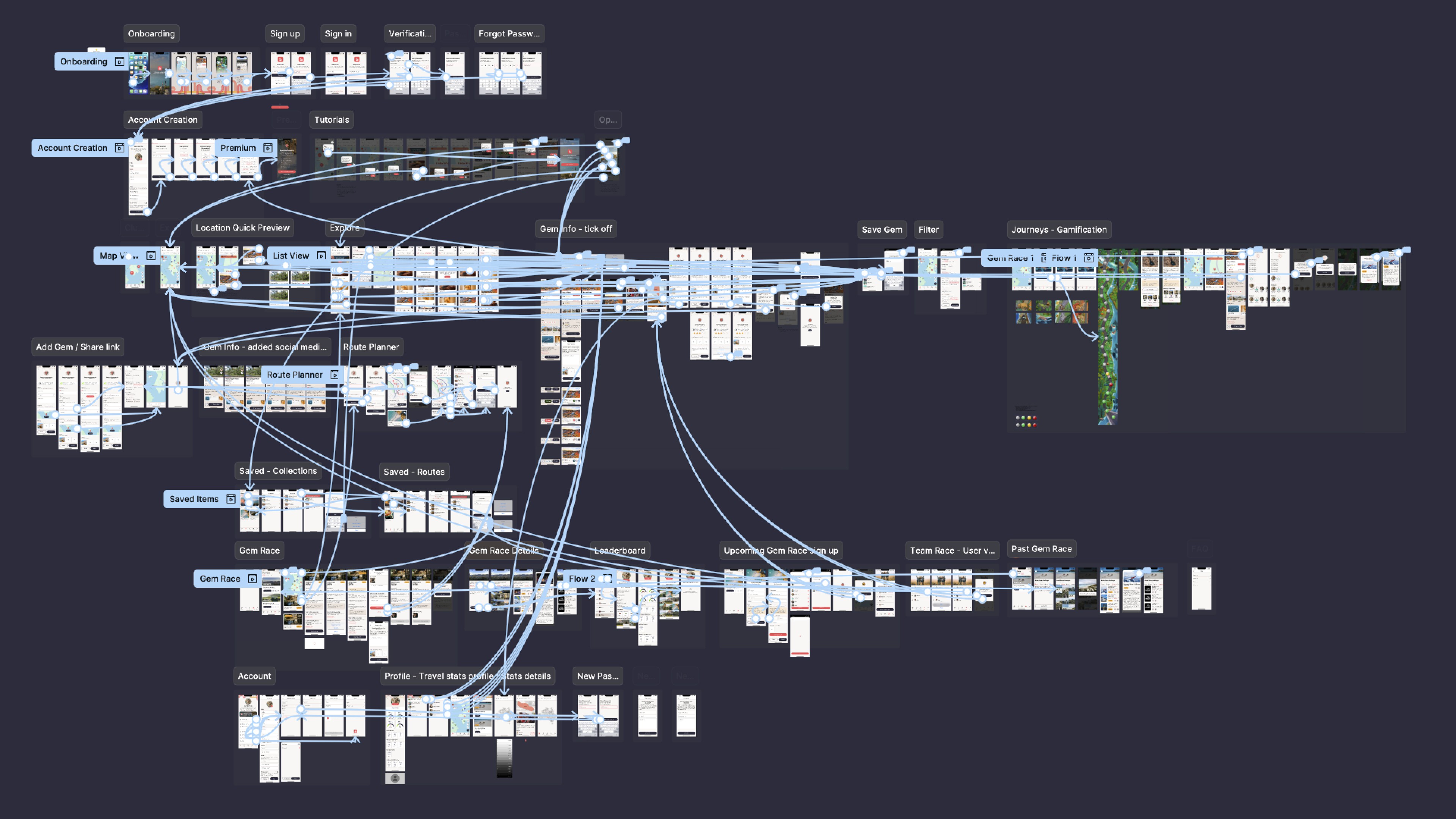
User Research & Data Analysis: We mapped how existing users were navigating the app, identifying the primary flows people actually used versus the flows the product assumed they would use. By analysing interaction data, retention patterns, and drop-off points, we built a clear picture of where the experience was working and where it was losing people.
Information Architecture: With a clearer understanding of user behaviour, we restructured the app’s information architecture to reflect how people think about discovery — not how the product’s backend was organised. Navigation was simplified, and content hierarchies were rebuilt to reduce friction in the most common paths through the app.
Competitive Benchmarking: We looked at how comparable apps in the discovery and location categories handled content presentation, user submission flows, and community features. This gave us a baseline for what users would expect and where Beyonder had a genuine opportunity to differentiate.
“The most valuable research isn’t always what users say — it’s what their behaviour reveals when the product isn’t quite working.”
Strategic Framing: From research, we developed a clear product design brief that the entire team could align around: reduce the friction between curiosity and discovery, make it easy to contribute, and build an experience that rewards return visits. Every subsequent design decision was evaluated against this framing.
Design Solution
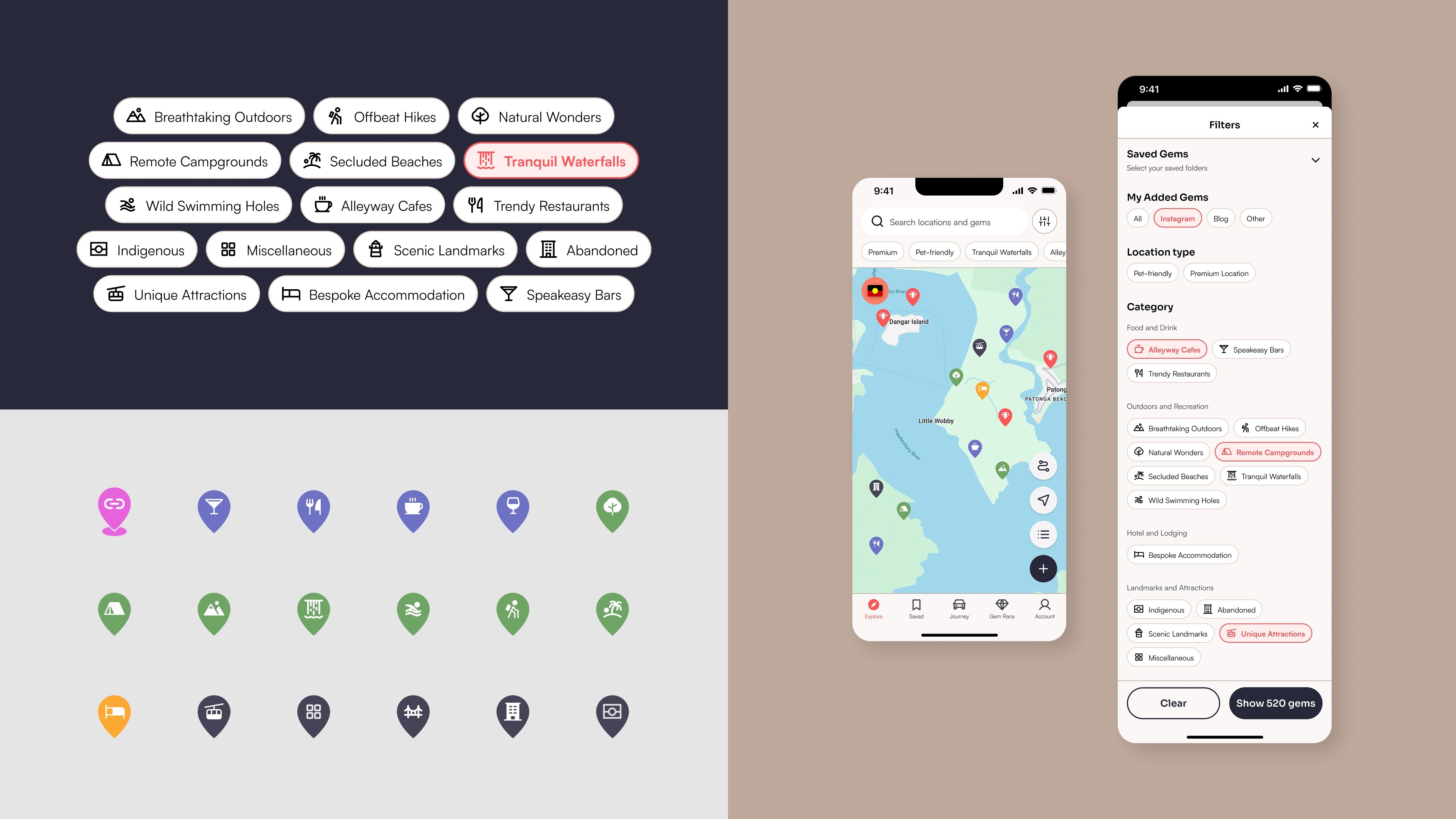
Visual Identity & Design Language: One of the most impactful early decisions was establishing a coherent visual identity for the app. We defined a colour palette, typography system, and iconography approach that gave Beyonder a distinct, recognisable character — one that felt appropriate for exploration without leaning on tired adventure clichés. This identity became the foundation of a design system that allowed both our team and the development team to work faster and with greater consistency.
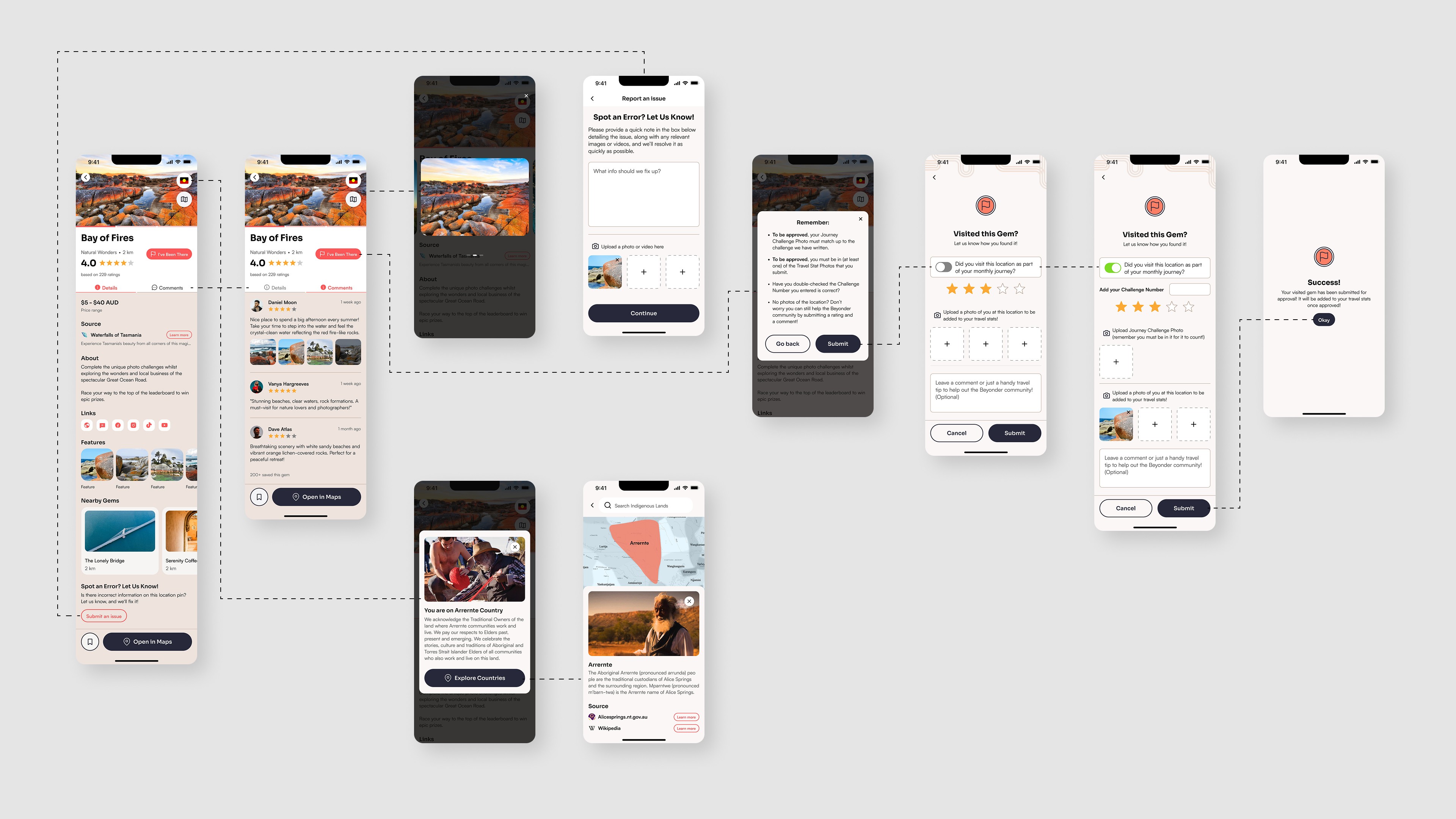
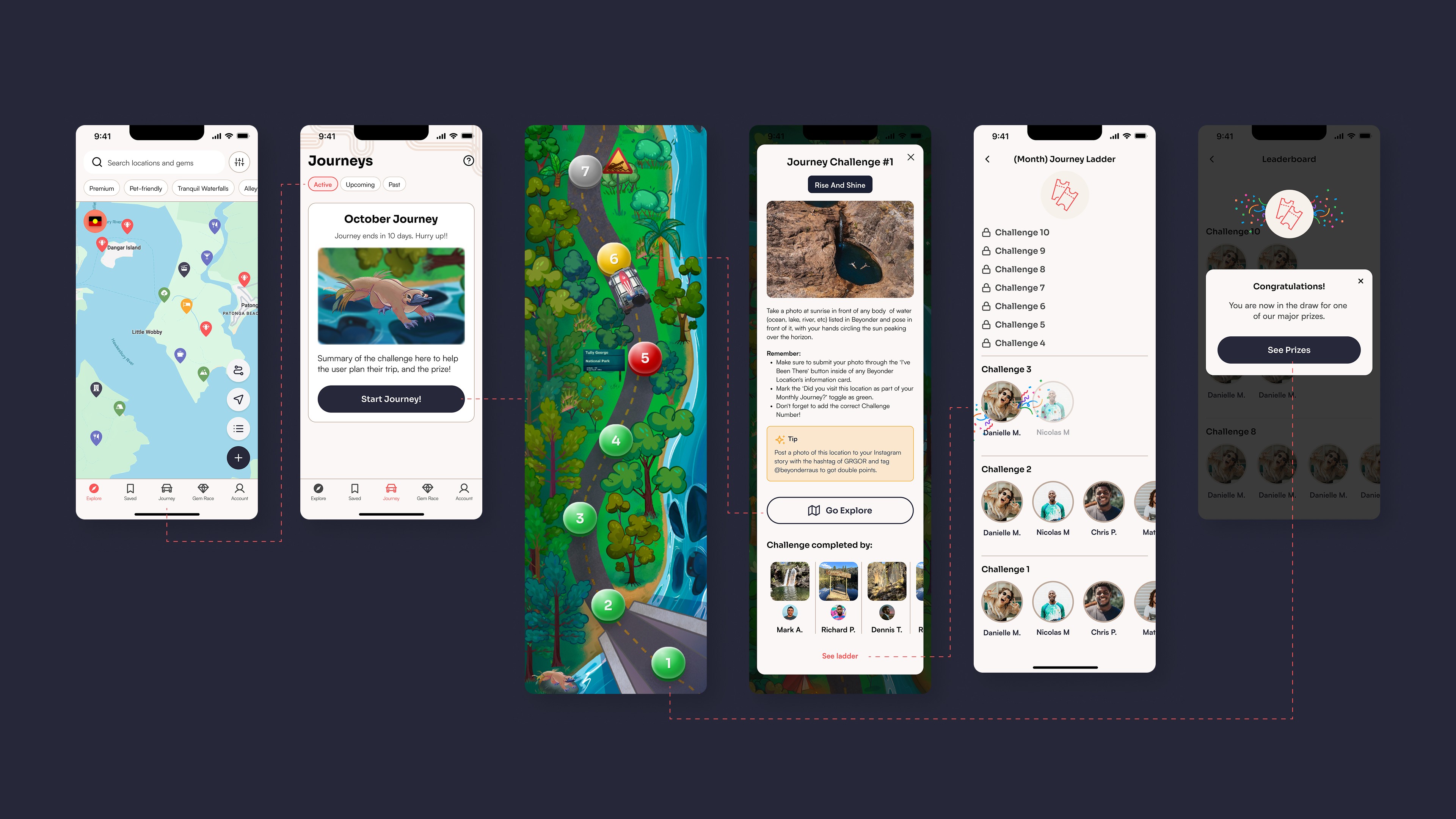
Interface Design: We designed each core surface of the app with a clear purpose: the discovery feed, location detail pages, the submission flow, user profiles, and search. Each screen was designed to reduce cognitive load — fewer decisions, clearer hierarchy, faster path to what the user came for.
Mobile-first was non-negotiable. The majority of Beyonder’s users are on phones, often in context — outdoors, in motion, with divided attention. Every interaction was designed to work with that reality, not against it.
Interaction Design & Prototyping: We built interactive prototypes for all key flows before a single line of production code was written. This allowed us to pressure-test navigation logic, identify friction early, and validate assumptions with real users — not just internal stakeholders.
Micro-interactions and animation were treated as functional decisions, not decoration. Transitions signal state. Feedback confirms actions. Motion reinforces hierarchy. Each interactive detail was specified with intent and handed off with the same rigour as layout and typography.
Management Platform: Running in parallel to the consumer app, we designed a desktop management platform that gives the Beyonder team genuine operational control. The platform handles:
Location management — reviewing, editing, approving, and organising entries at scale
User submission moderation — a structured workflow for processing community content efficiently
Feature configuration — the ability to surface, suppress, or highlight content without a development deploy
Data oversight — dashboards and views that give the team visibility into platform health and content quality
Designing for an internal tool audience requires a different kind of thinking than consumer product design — efficiency and precision over delight. The management platform was built with that in mind: dense information, clear affordances, and workflows that match how the team actually operates.
Testing and Development Handoff
Usability testing was embedded throughout the process, not bolted on at the end. We tested with real users at multiple stages — on wireframes, prototypes, and in-development builds — using task-based scenarios to evaluate whether people could actually achieve what the product needed them to do.
Findings were fed back into the design in real time. This iterative loop between testing, insight, and revision is what separates design that works from design that looks good in a presentation.
Handoff & Design System
We maintained a living design system throughout the engagement — a shared source of truth for components, tokens, spacing rules, and interaction states. Handoff to development was continuous, not a single moment at the end of a phase. Developers received annotated specifications, component logic, and spacing documentation that reduced ambiguity and accelerated build time.
The design system was built for scalability: new features could be introduced without starting from scratch, and the visual consistency of the product was protected as the team grew.
Results and Impact
Two years is a meaningful measure of a design partnership. The outcomes of this engagement are visible not just in individual screens but in the health and trajectory of the product as a whole:
A coherent, scalable product experience where there had been none — one that the development team can build on with confidence.
Significantly reduced friction in the core discovery and submission flows, with user testing confirming improved task completion rates across key paths.
A management platform that replaced manual processes with a structured, scalable workflow — giving the Beyonder team the operational leverage they needed to grow.
A design system that accelerates new feature development and maintains visual and interaction consistency across every surface of the app.
An ongoing collaborative model that has brought specialist expertise — user research, interaction design, prototyping, testing — into the product process at the moments they’re most needed.
“The best design partnerships aren’t about delivering a finished product. They’re about becoming part of how a product thinks.”


